
Hihi – Chat & Date Nearby
AURORACODE PTE. LTD.Entertainment
4.3105.00 Reviews
- Version
- 1.0.5
- Installs
- 10.00K
- Age Rating
- Mature 17+
Screenshots



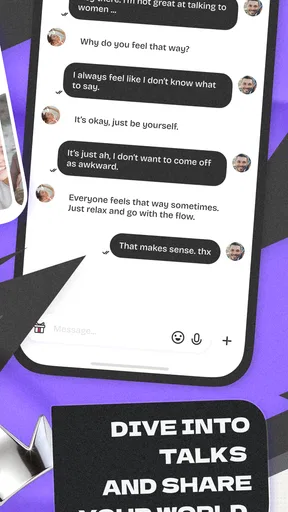

Our Review of Hihi – Chat & Date Nearby
 Analysis by Appyee
Meeting people nearby sounds simple until most social apps turn the experience into endless scrolling, distant matches, or conversations that never leave the screen. Hihi takes a more focused approach: it is an entertainment app built around discovering real people in your area, starting a chat, and seeing whether a local connection develops. I found that nearby discovery changes the mood of the experience. Instead of treating every profile as an abstract possibility, it gives the conversation a practical context: this person may actually be part of the same city, neighborhood, or daily routine.
The app is free to install, and it comes from AURORACODE PTE. LTD. It is intended for mature users aged 17 and over, which matters because the purpose is social and potentially dating-oriented rather than general family entertainment. The current release is version 1.0.5 and works on Android devices running version 8.0 or later. Its average rating is 4.3 from around 1.4 thousand ratings, while the app has passed 10 thousand installs. Those figures suggest a modest but active starting community rather than the huge user pool of a long-established social platform.
Why nearby discovery is the app’s defining idea
The strongest part of Hihi is not simply that it lets people chat. Plenty of messaging and dating services already do that. The meaningful difference is the emphasis on local connections. When I use an app with this focus, I judge it less by how many profiles it can show and more by whether the people it presents feel realistically reachable. A nearby conversation has a different potential outcome from one with someone several hours away: meeting for coffee, joining a local activity, or continuing a casual connection in person is more plausible.
That local angle also changes how I think about a profile. On a broad social network, a profile can be interesting without being useful to my everyday life. In Hihi, location becomes part of the decision. I am not only asking whether I like the person’s presentation; I am also considering whether the distance makes an eventual meeting sensible. This can reduce wasted conversations with no practical path forward, although it also means the experience depends heavily on how many suitable people are active in the surrounding area.
I would describe the app as a lightweight bridge between online discovery and offline social life. It is not a replacement for a full social network, and I would not approach it expecting a detailed community forum or a complete event-planning service. Its appeal is narrower and clearer: find people nearby, open a conversation, and decide whether the interaction deserves more attention.
That narrow purpose is useful because it keeps the first decision straightforward. If I want to meet people in my area, Hihi makes that intention central. If I want professional networking, long-form communities, or a broad feed of content from around the world, another category of app would be a better fit. The local focus is both the reason to try it and the boundary of what I expect it to do well.
What the first conversation feels like
The first message carries more weight in a nearby app than it does in a general chat service. A vague greeting can easily disappear because people have no reason to prioritize it. I had better results treating the local context as a natural conversation starter rather than forcing an overly personal introduction. Asking about a familiar area, a nearby type of activity, or what brought someone to the app feels less artificial than copying a generic pickup line.
This is one of the less obvious effects of the app’s concept: proximity gives a conversation an opening topic, but it does not automatically create trust. I still need to judge whether the person communicates clearly, respects boundaries, and seems consistent. Being nearby is a practical advantage, not proof that someone is safe, compatible, or sincere.
I also recommend deciding early what kind of connection I am looking for. A person hoping for casual local conversation may use Hihi differently from someone looking for a date or a new friendship. Keeping that intention clear helps avoid misunderstandings. The app creates the introduction, but the quality of the interaction depends on how honestly both people handle the next step.
Using it in an ordinary local routine
The most convincing use case for me is a person who has recently moved, works remotely, or spends much of the week in the same area without naturally meeting new people. Imagine finishing work on a weekday and wanting more local contact than another evening of isolated scrolling. Hihi can provide a starting point for finding someone nearby to chat with. If the conversation feels comfortable, the next step could be a short meeting in a public place rather than an elaborate plan.
That scenario shows why local discovery can be more useful than a larger but less relevant pool. A distant match may offer an entertaining conversation, but it does not easily become part of my routine. A nearby person may have a smaller geographic gap and a more realistic chance of meeting. The trade-off is that I may see fewer suitable profiles, especially outside busy areas or at quieter times.
For the first meeting, I would keep things simple and public. A short daytime coffee or a busy public venue is easier to leave than a long or isolated plan. I would also tell a trusted person where I am going and avoid sharing sensitive personal information too early. These are not special app functions; they are sensible habits whenever an online conversation moves toward an offline meeting, particularly in an app designed to connect local strangers.
Another useful workflow is to treat the first chat as a quick compatibility check rather than an obligation. I look for basic signs of mutual effort: does the person respond to what I actually said, respect a slower pace, and show interest beyond immediately asking for private details? If not, ending the conversation is reasonable. The nearby setting should make a good connection easier to continue, not make me feel pressured to continue a poor one.
Where the app is more useful than familiar alternatives
Compared with a general messaging app, Hihi has a clearer discovery purpose. In a messaging service, I usually need an existing contact, a shared group, or an invitation before a conversation begins. Here, the point is to meet people I do not already know in my local surroundings. That makes it more suitable for expanding a social circle than for keeping up with established friends.
Compared with a broad social network, the experience is potentially less distracting. A large network may surround conversations with news, public posts, creators, and unrelated content. Hihi’s local-connection idea gives me a more direct reason to open it. The downside is that it may feel less rich if I want a constant stream of content or a large community organized around hobbies and interests.
Compared with a traditional dating service, the local emphasis can feel more immediate, but I would not assume it offers the same depth of matching tools or the same scale of audience. Someone who wants extensive preference controls, a very large pool, or a highly structured dating process may prefer a specialized dating platform. Hihi makes more sense for someone who values a simple path from nearby discovery to conversation and is comfortable doing more of the judgment personally.
That distinction is important. The app’s value is not that it replaces every other way of meeting people. Its value is that it reduces one specific barrier: not knowing who nearby might be open to a new connection. Once that barrier is removed, I still have to communicate well, recognize incompatibility, and decide whether an offline meeting is appropriate.
The practical trade-offs before spending time in it
The first limitation is audience density. A local app can only feel lively when enough relevant people are using it in the same area. The overall install figure, above 10 thousand, indicates that Hihi has an emerging audience, but that does not guarantee a deep selection in every town. Someone in a major urban area may find the nearby concept more rewarding than someone in a sparsely populated region. I would try it with realistic expectations rather than assuming a continuously full local feed.
A second trade-off is privacy. The feature that makes the app useful also makes location sensitivity important. I would avoid treating a nearby label as permission to reveal my exact home, workplace, regular schedule, or other identifying details. A local connection can become too local if the conversation moves quickly into personal routines. I would keep early chats general and choose a meeting place that does not expose where I live.
The mature age rating is another reason to approach the app thoughtfully. It signals that this is not an app I would hand to a younger user or treat as a casual children’s social space. Adults should still set their own boundaries, because an age rating does not tell me that every interaction will be respectful or suitable. I would block or disengage from anyone who ignores a clear boundary instead of trying to repair an uncomfortable conversation.
There is also a financial consideration. The app is free, but optional in-app purchases range from $0.99 to $499.99 per item. That is a very wide span, so I would be particularly careful before confirming any purchase. I would begin with the free experience, understand what I can do without paying, and avoid buying anything simply because a conversation has become exciting. A paid option may be worthwhile for a specific need, but it should never be confused with a guarantee of better chemistry or a safer person on the other side.
Because Hihi is still a relatively young service, I also see a trade-off between simplicity and maturity. A newer app can feel less crowded and more direct, but it may not have the depth of habits, local activity, or user familiarity found in older alternatives. That does not make it a poor choice; it means I would judge it by the quality of the nearby conversations I can actually start, not by the promise of a large global network.
Small habits that make nearby chatting better
My first practical tip is to use a short trial window. I would spend enough time to see whether local profiles are relevant and whether conversations receive genuine replies, then decide whether the app deserves a regular place on my phone. This prevents me from investing weeks in an experience that simply lacks activity in my area.
My second tip is to move from vague chat to a low-pressure plan only when the exchange feels balanced. A specific but flexible suggestion, such as meeting briefly in a public place, is more useful than endless messages or an immediate commitment to a long evening. If the other person avoids reasonable boundaries or pushes for privacy, I would treat that as a reason to stop rather than a challenge to overcome.
My third tip is to keep the local advantage from becoming a privacy weakness. I would not mention my exact apartment, commute, or predictable weekly schedule during the first conversations. It is possible to discuss general neighborhoods or public venues without giving away a personal map of my life. This is especially important because the app’s central promise encourages users to think about physical distance from the start.
Finally, I would avoid measuring success only by the number of chats. For Hihi, one respectful, genuinely local conversation can be more valuable than a long list of weak interactions. The app works best when I use nearby discovery as a filter for realistic possibilities, not as a reason to collect as many contacts as possible.
Who should try it, and who should choose something else
I think Hihi is best for adults who want to expand their local social options without joining a large, noisy social network. It is especially appealing if I have recently moved, work from home, want to meet people outside my existing circle, or prefer the possibility of an in-person connection over a purely online exchange. The free entry point makes it easy to test whether the local audience suits me before considering any purchase.
I would be more cautious if I lived in an area with very little activity, disliked location-based discovery, or wanted a highly detailed matching system. Someone who prefers anonymous online communities may also feel uncomfortable with the app’s nearby emphasis. Likewise, a person seeking only established-friend messaging should use a conventional chat app instead, because Hihi is designed around meeting people rather than maintaining an existing contact list.
The developer, AURORACODE PTE. LTD., has positioned the experience around a clear idea rather than an overloaded entertainment feed. In my view, that clarity is its main strength. The app does not need to become my entire social life; it only needs to make the first local introduction easier and give me enough room to decide what happens next.
My final impression is positive but measured. Hihi is worth trying when the question I want answered is, “Who nearby might I enjoy talking to?” Its local focus can turn an abstract online interaction into a realistic possibility, and that is a meaningful difference from ordinary social scrolling. Still, I would keep expectations grounded, protect my privacy, use public meeting places, and treat purchases carefully. The best reason to use Hihi is not the promise of instant chemistry, but the practical chance to discover a real local connection.
Verdict
Strengths of Hihi – Chat & Date Nearby
- Nearby discovery makes it easy to meet people in your area.
- Simple interface helps new users start chatting quickly.
- Useful filters can narrow matches by preferences and distance.
- Profile photos and basic details support faster first impressions.
- Chat features encourage casual conversations before meeting in person.
Limitations of Hihi – Chat & Date Nearby
- The quality of matches may vary depending on your location.
- Some features may require a paid subscription or in-app purchases.
- Nearby visibility can raise privacy concerns for cautious users.
- Profiles may include inactive accounts or incomplete information.
- As with any dating app, users should watch for fake or suspicious profiles.
Similar Picks in This Category
View All
Google Play Games
Google LLC3.9

Netflix
Netflix, Inc.4.8

YouTube Kids
Google LLC4.2

Disney+
Disney4.4

Prime Video
Amazon Mobile LLC4.7

Steam
Valve Corporation3.2
Frequently Asked Questions
What is Hihi – Chat & Date Nearby, and how does it work?
Hihi – Chat & Date Nearby is a social dating app designed to help users discover and communicate with people in their area. After creating a profile, you can browse nearby members, view their photos and basic information, and start conversations when there is mutual interest. The experience depends heavily on the number of active users around your location, so results may vary by city or region.
Is Hihi – Chat & Date Nearby free to download and use?
The app can generally be downloaded without an upfront charge, but some features may require in-app purchases, credits, or a subscription. Depending on the current version, premium options can include enhanced visibility, additional messaging tools, or access to extra profile information. Before using paid features, check the pricing, renewal terms, and cancellation instructions shown in the app store or within the application.
Is Hihi – Chat & Date Nearby safe for meeting and chatting with strangers?
As with any location-based dating platform, users should take privacy and personal safety seriously. Avoid sharing your home address, financial details, passwords, or sensitive documents, and be cautious if someone quickly asks for money or tries to move the conversation elsewhere. Use available blocking and reporting tools, verify profiles when possible, and arrange first meetings in busy public places.
Does Hihi require access to my location, contacts, camera, or other phone features?
A nearby dating app may request location access to show profiles in your selected area, while camera and photo permissions can be needed for uploading profile pictures or sending images. Contact access is not usually essential for browsing or messaging and should only be granted if you are comfortable with the purpose. Review each permission carefully and disable anything you do not consider necessary.
Can I delete my Hihi account and control who contacts me?
You should be able to manage your profile, notification settings, privacy options, and conversations from the application, although the exact menu names may differ between versions. Look for account or settings sections to hide your profile, block unwanted users, report suspicious behavior, or remove your account. If you purchased a subscription, deleting the app may not cancel billing, so cancel it separately through Google Play or the App Store.
